The correct and safe Implant placement is driven by several
factors including, but not limited to, anatomical challenges, lack of adequate
amount of bone, poor bone quality, poor soft tissue quality and quantity.
Clinicians have used a myriad of techniques with the goal of overcoming these
challenges. We believe that a sound knowledge of the anatomy accompanied with
surgical skills, from identifying anatomical structures to choosing augmentation
materials and surgical techniques are of paramount importance in surgical
implant dentistry. The course will
address both aspects of implant dentistry: an in depth knowledge of human
maxillofacial anatomy and surgical techniques for horizontal and
vertical ridge augmentation. These include guided bone regeneration (GBR),
ridge expansion/splitting, and titanium mesh techniques
During the didactic portion of the course, limitations and
opportunities of different techniques and materials will be explored. The
predictability of various techniques for ridge defects for implant placement
will be presented. A series of cases will illustrate risk assessment and
predictable management of various size defects ranging from moderate to severe
defects, based upon knowledge of anatomy.
During the Anatomy Lab session, the following points will be
presented:
Identification and preparation of mandibular area - Nerves:
Mandibular, Inferior alveolar Nerve, Lingual Nerve, Bone structures: Spix’s
spine, Mandibular foramen. Arteries: Inferior alveolar, lingual,
Submental and Sublingual. Identification and preparation of maxillary areas
including the Maxillary, Infraorbital, and Nose-Palatine Nerves. In addition
the osseous structure will be exposed and identifies, including the Nose
Palatine canal, Maxillary foramen, Nasal floor, Tuber -and the Maxillary, Palatine, and Facial arteries.
The participant will learn about:
- Oral cavity anatomy and critical structures
- Bone biology and graft healing
- Why different flap designs
- Grafting in the
esthetic zone
- Grafting of vertical ridge defects
- When to perform bone graft versus soft tissue graft
- Comparing various graft materials
- Recognizing and treating graft complications
- Different suturing techniques
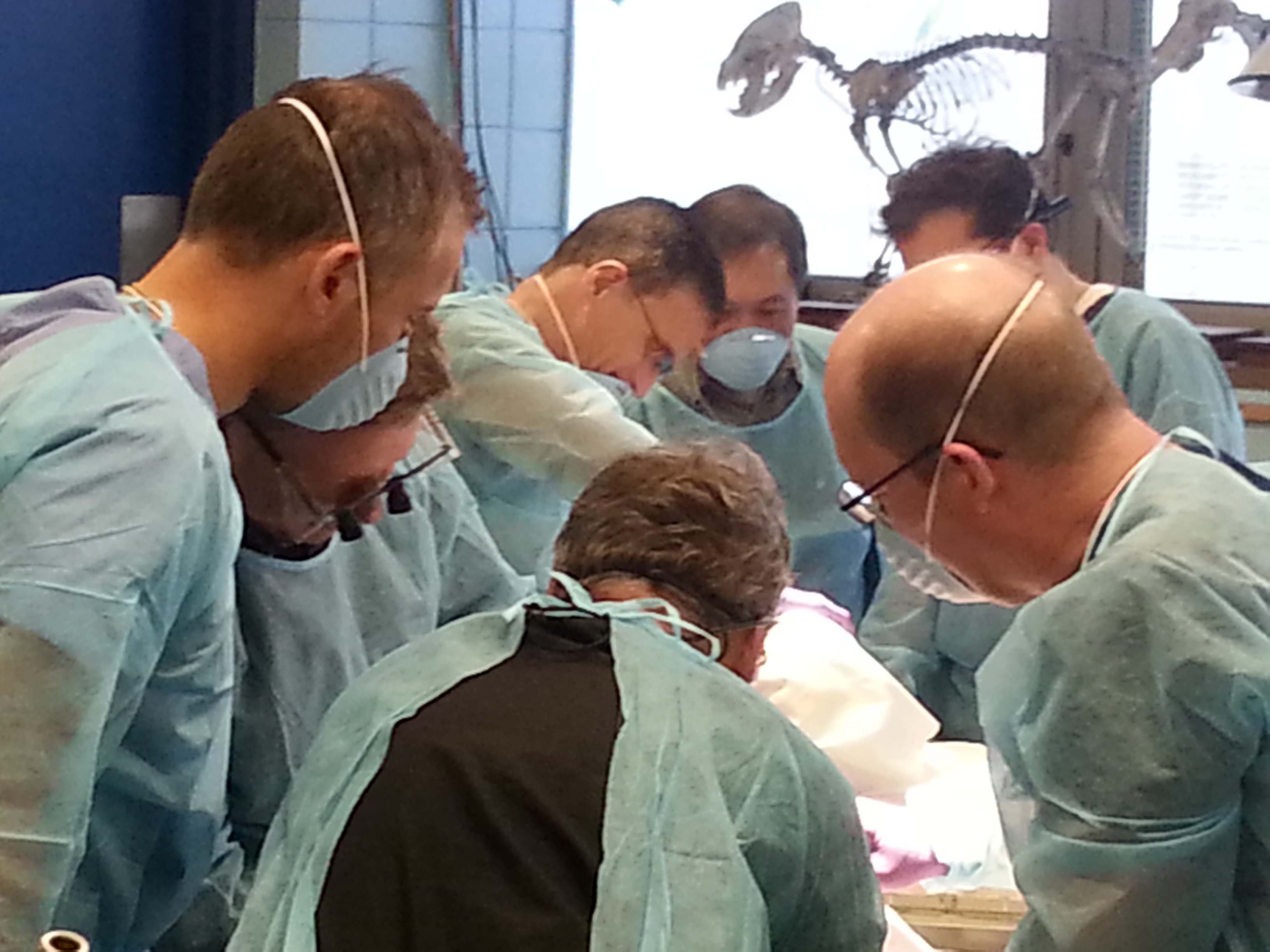
Three participants will be assigned to each cadaver
specimen. A 'close to reality' simulation of the surgical procedures will be
experienced. Faculty will support and guide you through the whole process. You will apply the knowledge gained during the gross anatomy session, focusing
on critical structures, such as Inferior Alveolar Nerve, Lingual nerve, bone
concavities, including blood supply.
Hands-on exercises will include:
- Flap design in different anatomical sites
- Simple implant osteotomy
- Immediate implants and simultaneous bone grafting
- Flap design for bone augmentation
- Vertical bone augmentation with tenting screws, membranes
and bone grafts
- Horizontal bone augmentation
- Soft tissue manipulation
- Passivation of lingual and buccal side
- Different kinds of suturing techniques
Surgical units, instruments, and teaching materials will be
provided.
This course SOLD OUT all seats full!